If you’ve ever found yourself suddenly feeling overheated, sweaty, flushed, and uncomfortable for no apparent reason, you’re not alone. Hot flashes are one of the most common symptoms of perimenopause and menopause, affecting millions of women every year.
While fluctuating hormones are the primary cause, certain daily habits can make hot flashes more frequent and more intense. The good news? Small changes can often make a noticeable difference.
Let’s look at five common hot flash triggers and what you can do to help manage them.
What Causes Hot Flashes?
Hot flashes occur when changing estrogen levels affect the body’s temperature regulation system. This can cause your body to suddenly think it’s overheating, even when it isn’t.
Symptoms may include:
- Sudden warmth in the face, neck, or chest
- Sweating
- Red or flushed skin
- Chills after the hot flash passes
- Increased heart rate
- Sleep disruptions
While hormone changes are the main cause, certain lifestyle factors can make symptoms worse.
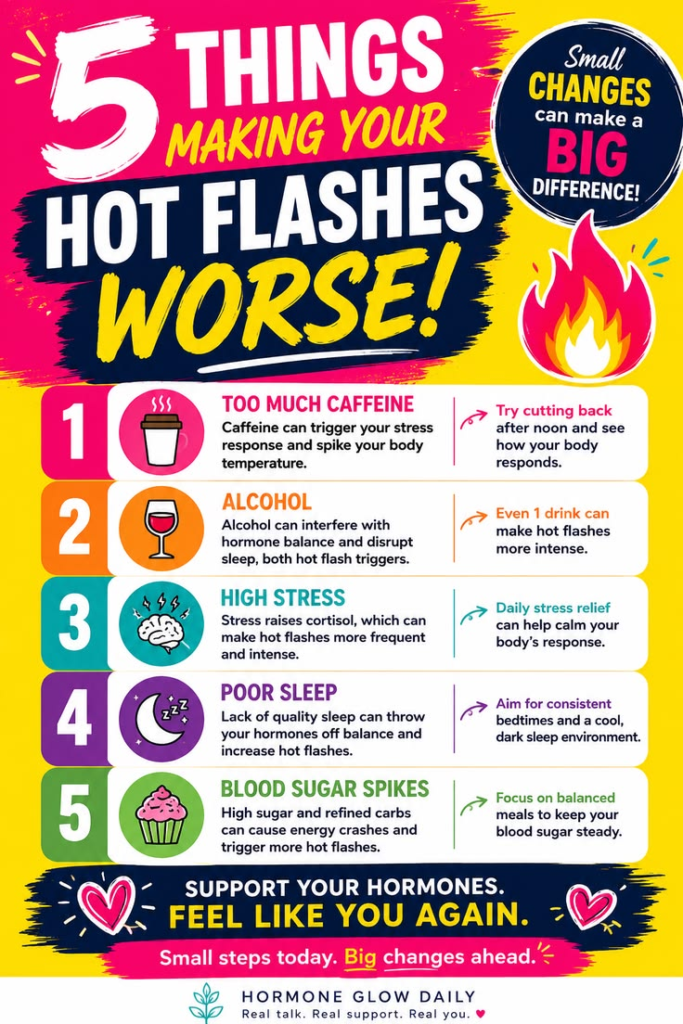
1. Too Much Caffeine

Many women rely on coffee to get through the day, especially when fatigue becomes more common during perimenopause. However, caffeine can increase heart rate, stimulate the nervous system, and make hot flashes feel more intense.
Why it matters
Caffeine may:
- Increase body temperature
- Trigger anxiety and jitters
- Disrupt sleep quality
- Increase sensitivity to stress
What to do instead
Try:
- Limiting caffeine after noon
- Drinking water before your morning coffee
- Reducing the number of caffeinated drinks you consume daily
- Switching to herbal tea later in the day
You don’t necessarily have to give up coffee completely. Many women notice improvement simply by reducing the amount they drink.
2. Alcohol

A glass of wine may seem relaxing, but alcohol is a common hot flash trigger for many women.
Why it matters
Alcohol can:
- Dilate blood vessels
- Increase body temperature
- Interfere with sleep quality
- Trigger nighttime sweating
What to do instead
Pay attention to patterns. Consider keeping a symptom journal and noting when hot flashes occur. Some women discover that even small amounts of alcohol can worsen symptoms.
3. High Stress Levels

Stress and hormones are closely connected.
When stress increases, cortisol levels rise. High cortisol can worsen many perimenopause symptoms, including hot flashes, sleep problems, irritability, and fatigue.
Signs stress may be affecting your symptoms
- Increased hot flashes during busy days
- Feeling overwhelmed easily
- Trouble sleeping
- Constant tension or worry
What to do instead
Simple stress-reducing habits can help:
- Daily walks
- Deep breathing exercises
- Meditation
- Journaling
- Spending time outdoors
- Setting healthy boundaries
Even 10 minutes a day can make a difference.
4. Poor Sleep

Sleep and hormones influence each other.
Hot flashes can disrupt sleep, and poor sleep can make hot flashes feel worse the next day.
Why sleep matters
Lack of sleep can:
- Increase stress hormones
- Worsen mood swings
- Reduce resilience to daily stress
- Increase symptom intensity
Tips for better sleep
- Maintain a consistent bedtime
- Keep your bedroom cool
- Avoid screens before bed
- Limit caffeine late in the day
- Create a calming nighttime routine
Improving sleep often helps improve overall hormone symptoms.
5. Blood Sugar Spikes
Many women don’t realize that blood sugar fluctuations can affect how they feel throughout the day.
Meals high in sugar and refined carbohydrates can cause energy crashes and may contribute to hormone-related symptoms.
Signs of blood sugar swings
- Afternoon fatigue
- Strong cravings
- Irritability
- Energy crashes
- Feeling shaky or hungry soon after eating
What to do instead
Focus on balanced meals that include:
- Protein
- Healthy fats
- Fiber-rich foods
- Vegetables
- Whole grains
Balanced blood sugar supports stable energy and may help reduce symptom severity.
Small Changes Can Make A Big Difference

You can’t stop hormonal changes from happening, but you can support your body through them.
Start with one small change this week:
- Reduce caffeine
- Improve your sleep routine
- Take a daily walk
- Focus on balanced meals
- Make time for stress relief
Over time, these simple habits can help you feel more comfortable, more energized, and more in control of your symptoms.
Final Thoughts
Hot flashes are a normal part of the perimenopause transition, but they don’t have to take over your life.
If your symptoms are becoming severe, affecting your quality of life, or causing concern, talk with your healthcare provider. Every woman’s experience is different, and support is available.
Remember: your body isn’t working against you. It’s changing, and learning how to support those changes can make all the difference.
Disclaimer: The information provided on Hormone Glow Daily is for educational and informational purposes only and is not intended as medical advice, diagnosis, or treatment. Always consult with a qualified healthcare professional regarding any medical concerns, symptoms, or treatment decisions. Never disregard professional medical advice or delay seeking care because of something you have read on this website. Individual experiences with perimenopause and menopause can vary, and what works for one person may not work for another.