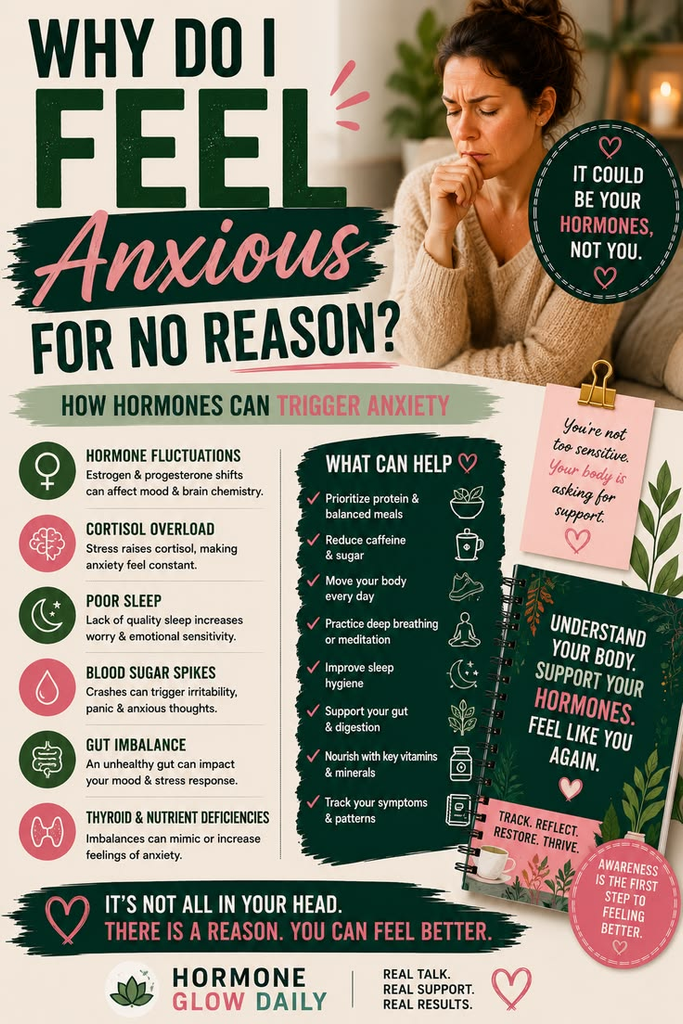
Description:
Feeling anxious for no reason after 35? Learn how perimenopause, hormone fluctuations, sleep changes and stress can affect anxiety, mood and your everyday life.
Have you ever been sitting on the couch, driving to work, getting ready for bed, or simply going about your day when suddenly you feel anxious for no obvious reason?
Your mind may start racing.
Your chest might feel tight.
You may feel restless, irritable, shaky, overwhelmed, or unable to relax.
And perhaps the strangest part is that nothing actually happened to cause it.
You might even find yourself thinking:
“Why am I feeling like this? Nothing is wrong.”
If you’re over 35 and this feels completely different from the way you used to experience stress, it’s worth looking at the bigger picture.
During perimenopause, hormone levels can fluctuate significantly, and those changes can affect mood and anxiety. The American College of Obstetricians and Gynecologists notes that some women experience anxiety, irritability, mood changes, difficulty concentrating, and sleep problems during the menopause transition.
That doesn’t mean every anxious feeling is caused by hormones.
But it does mean that your hormones can be one piece of the puzzle.👉[https://www.etsy.com/listing/4561313357/perimenopause-body-changes-guide?sr_prefetch=1&pf_from=shop_home&ref=shop_home_active_1&dd=1&logging_key=1d9a89f631ed67da4c7c630330c8ad5fdcf3fa78%3A4561313357]
The “Something Is Wrong With Me” Feeling

One of the hardest parts of perimenopause can be experiencing several changes at once without realizing they may be connected.
You might notice:
- You’re suddenly more anxious.
- Little things bother you more than they used to.
- You feel overwhelmed much faster.
- Your patience seems shorter.
- You have trouble concentrating.
- Your thoughts won’t slow down at night.
- You wake up feeling anxious.
- You’re tired but somehow still wired.
- You feel emotionally sensitive.
- You don’t feel quite like yourself.
And because these symptoms don’t always happen alongside obvious menopause symptoms, you may not immediately connect them to perimenopause.
ACOG explains that mood changes during perimenopause can sometimes resemble PMS but may occur at times unrelated to your menstrual cycle.
That’s one reason tracking your symptoms can be useful.
1. Hormone Fluctuations Can Affect Your Mood
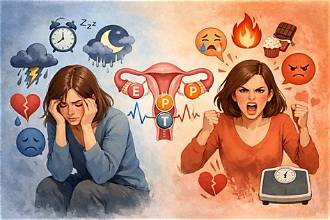
Perimenopause isn’t simply a time when estrogen gradually decreases.
Hormone levels can rise and fall, sometimes unpredictably.
Those fluctuations can coincide with changes in mood, sleep, periods, hot flashes, and other symptoms. ACOG notes that hormone changes during perimenopause can affect emotions and that physical symptoms such as sleep disruption and fatigue can make emotional symptoms harder to manage.
This can make the experience confusing.
You might have a perfectly normal day one week and then suddenly feel:
irritable → overwhelmed → anxious → exhausted
without understanding why.
2. Poor Sleep Can Make Anxiety Feel Worse
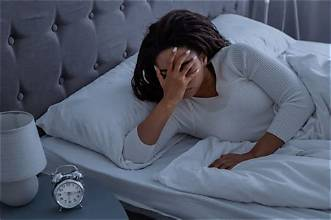
This one is easy to overlook.
Maybe the anxiety isn’t keeping you awake.
Maybe your changing sleep is making everything else harder to handle.
Perimenopause can bring:
- Trouble falling asleep
- Waking during the night
- Night sweats
- Waking earlier than usual
- Restless sleep
- Feeling exhausted the next morning
Then the next day you may find yourself more emotionally sensitive and less able to handle normal stress.
ACOG specifically notes that poor-quality sleep can make it harder to manage emotions and cope with stress.
So instead of looking at anxiety by itself, it can be helpful to ask:
“How have my sleep patterns changed?”
3. Stress and Hormonal Changes Can Overlap
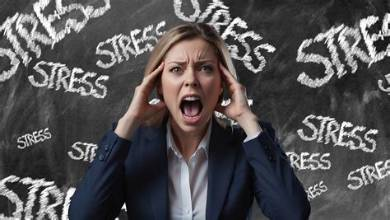
Here’s where things can get complicated.
You may already have a stressful life.
Work.
Family.
Money.
Relationships.
Aging parents.
Children.
Household responsibilities.
Then add changing hormones and poor sleep.
Suddenly, things that you previously handled easily can feel much bigger.
This doesn’t mean you’re becoming weak or overly sensitive.
It means several factors can be happening at the same time.
ACOG explains that life stress can add to mental-health challenges during the 40s and 50s, while hormonal changes and physical menopause symptoms can also affect emotions and fatigue.
4. The “Wired but Exhausted” Feeling

This is one of the most frustrating combinations.
You can be completely exhausted but unable to relax.
You want to sleep.
But your mind keeps going.
You feel tired.
But you don’t feel calm.
You may lie in bed thinking about tomorrow, replaying conversations, worrying about things that normally wouldn’t bother you, or simply feeling like your body refuses to settle down.
That combination of fatigue + restlessness + poor sleep + anxiety deserves attention rather than simply being dismissed as “getting older.”
5. Your Anxiety May Show Up Physically
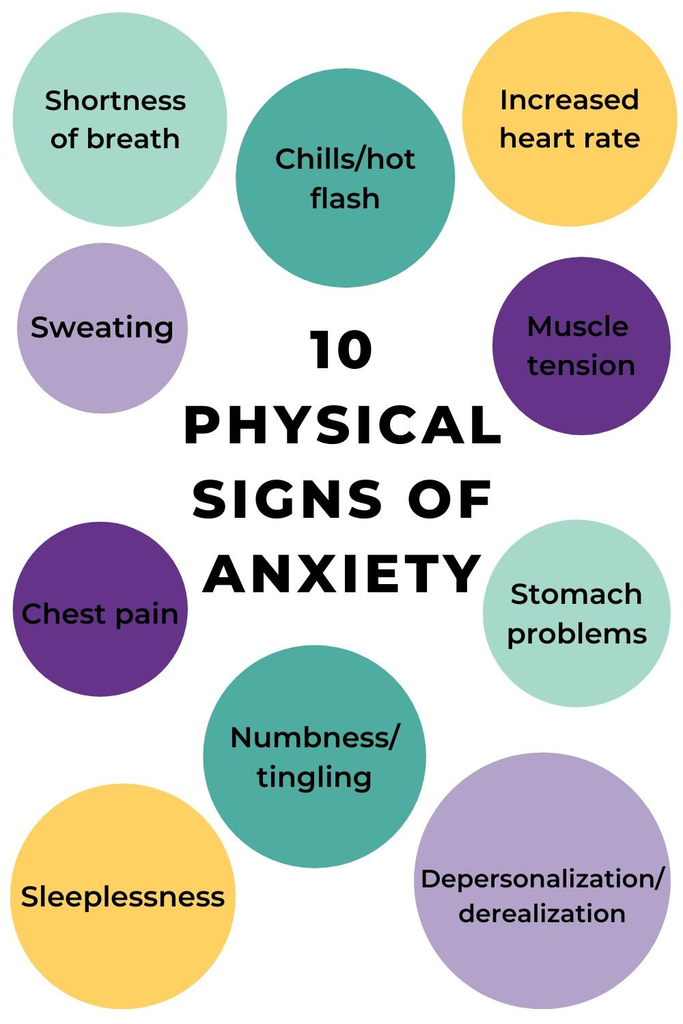
Anxiety isn’t always just thoughts.
It can show up in your body.
You might experience:
- Muscle tension
- Sweating
- Nausea
- Restlessness
- Racing thoughts
- Difficulty concentrating
- Trouble sleeping
- Feeling your heart beating more noticeably
- A sense of dread
- Feeling unable to relax
ACOG lists symptoms such as muscle tension, sweating, nausea, difficulty concentrating, and sleep problems among possible anxiety symptoms.
That’s why a woman can think:
“I’m not even worried about anything, so why does my body feel anxious?”
6. Don’t Automatically Blame Everything on Hormones
This is extremely important.
Perimenopause can overlap with many other conditions.
For example, symptoms that feel like anxiety can sometimes be associated with:
- Thyroid problems
- Medication effects
- Sleep disorders
- Nutritional deficiencies
- Blood-sugar problems
- Certain heart conditions
- Anxiety disorders
- Depression
- Other medical conditions
Johns Hopkins notes that clinicians may evaluate for other conditions, including thyroid disorders, when assessing anxiety during perimenopause.
So the goal isn’t to say:
“It’s definitely your hormones.”
The better question is:
“Could hormonal changes be one part of what’s happening—and is there anything else that should be checked?”
What Can You Do When You Suddenly Feel Anxious?

You don’t have to figure everything out at once.
Start by paying attention to your patterns.
Track when it happens👉 [https://www.etsy.com/listing/4561313357/perimenopause-body-changes-guide?sr_prefetch=1&pf_from=shop_home&ref=shop_home_active_1&dd=1&logging_key=1d9a89f631ed67da4c7c630330c8ad5fdcf3fa78%3A4561313357]
Write down:
- What time it happened
- How long it lasted
- What you were doing
- How you slept the night before
- Where you were in your menstrual cycle, if you’re still having periods
- Caffeine intake
- Major stress that day
- Other symptoms happening at the same time
This information can become extremely useful when talking with your healthcare provider.
ACOG specifically recommends tracking symptoms and discussing them with your ob-gyn when you’re concerned about changes during menopause.
Pay attention to sleep
Try to establish a consistent sleep and wake schedule and reduce things that interfere with sleep, such as late caffeine and excessive screen exposure before bed.
Don’t ignore movement
Regular physical activity can support mood and overall well-being. The Office on Women’s Health also recommends physical activity, adequate sleep, and stress-management strategies as part of managing menopause-related mood symptoms.
Look at the whole picture
Instead of focusing only on anxiety, ask:
“What else has changed?”
Your periods?
Your sleep?
Your weight?
Your energy?
Your digestion?
Your mood?
Your skin?
Your body temperature?
Your cravings?
Your ability to concentrate?
Sometimes the pattern is more revealing than one individual symptom.
What If I Don’t Feel Like Myself Anymore?
This is something women don’t always talk about.
You may still look like yourself.
You’re still doing your normal activities.
But internally, something feels different.
Maybe you’re more emotional.
Maybe you’re exhausted.
Maybe you’re suddenly anxious.
Maybe your sleep is terrible.
Maybe your body is changing in ways you don’t understand.
And you start wondering:
“Is this just me now?”
It doesn’t necessarily mean that.
Perimenopause is a transition, and symptoms can vary significantly from woman to woman. There are also medical and lifestyle options for managing symptoms when they begin interfering with daily life.
Want to Understand the Other Changes Happening in Your Body?
If anxiety is only one of several changes you’ve noticed, that’s where looking at the bigger picture can be helpful.
Maybe you’ve also noticed:
Your sleep changed.
Your weight changed.
Your skin changed.
Your energy changed.
Your mood changed.
Your body reacts differently than it used to.
That’s exactly why I created the Body Changes Guide.
🌸 Go Beyond the Symptom
The Body Changes Guide helps you step back and look at the changes you’re experiencing as a whole instead of wondering about each symptom separately.
Inside, you can learn more about common body changes, recognize patterns, reflect on what you’re experiencing, and create practical routines that support you through this transition.
Don’t just wonder why your body feels different. Start understanding the changes you’re noticing.
Frequently Asked Questions
Can perimenopause cause anxiety?
Perimenopause can be associated with anxiety and other mood changes. Hormonal fluctuations, physical menopause symptoms, sleep disruption, and life stress can all contribute.
Can anxiety be the first sign of perimenopause?
It can occur during the menopause transition, but anxiety by itself does not prove that you’re in perimenopause. Other causes should be considered, especially if the symptom is new, severe, persistent, or interfering with daily life.
Why do I feel anxious when nothing is wrong?
There isn’t always one explanation. Hormonal changes, poor sleep, chronic stress, caffeine, medications, thyroid problems, anxiety disorders, and other health conditions can contribute. A healthcare professional can help determine what may be happening.
Can cortisol cause anxiety?
Cortisol is an important stress hormone, but it’s too simplistic to say that “high cortisol” is automatically the cause of anxiety. Stress, sleep disruption, hormonal changes, and other factors can interact. Persistent or severe symptoms deserve proper evaluation.
When should I talk to my doctor?
Talk with your healthcare provider if anxiety is new, getting worse, difficult to control, affecting your sleep or daily life, or occurring alongside other concerning symptoms. ACOG recommends discussing significant mood or anxiety changes with your ob-gyn.
Can perimenopause anxiety be treated?
Yes. Treatment depends on the individual and may include lifestyle changes, therapy, medication, hormone therapy in appropriate patients, or a combination. ACOG notes that several treatment options are available for menopause-related symptoms and that decisions should be based on your symptoms and medical history.
Medical Disclaimer

This article is for educational and informational purposes only and is not medical advice, diagnosis, or treatment. Anxiety and other symptoms discussed here can have many possible causes and should not automatically be attributed to perimenopause or hormonal changes.
If you’re experiencing new, severe, persistent, or worsening symptoms, speak with a qualified healthcare professional. Seek urgent medical attention for emergency symptoms such as severe chest pain or pressure, significant difficulty breathing, fainting, sudden confusion, or other symptoms that may indicate a medical emergency.
Do not start, stop, or change medications, hormone therapy, supplements, or other treatments based solely on information in this article.
our body isn’t necessarily “going crazy.” But it is worth paying attention to.
If you’ve been noticing several changes at once and keep wondering “Could this be perimenopause?”, don’t stop at one symptom.
Explore the Body Changes Guide →https://www.etsy.com/listing/4561313357/perimenopause-body-changes-guide?sr_prefetch=1&pf_from=shop_home&ref=shop_home_active_1&dd=1&logging_key=1d9a89f631ed67da4c7c630330c8ad5fdcf3fa78%3A4561313357
Understand the changes. Track your patterns. Learn more about what your body may be telling you.