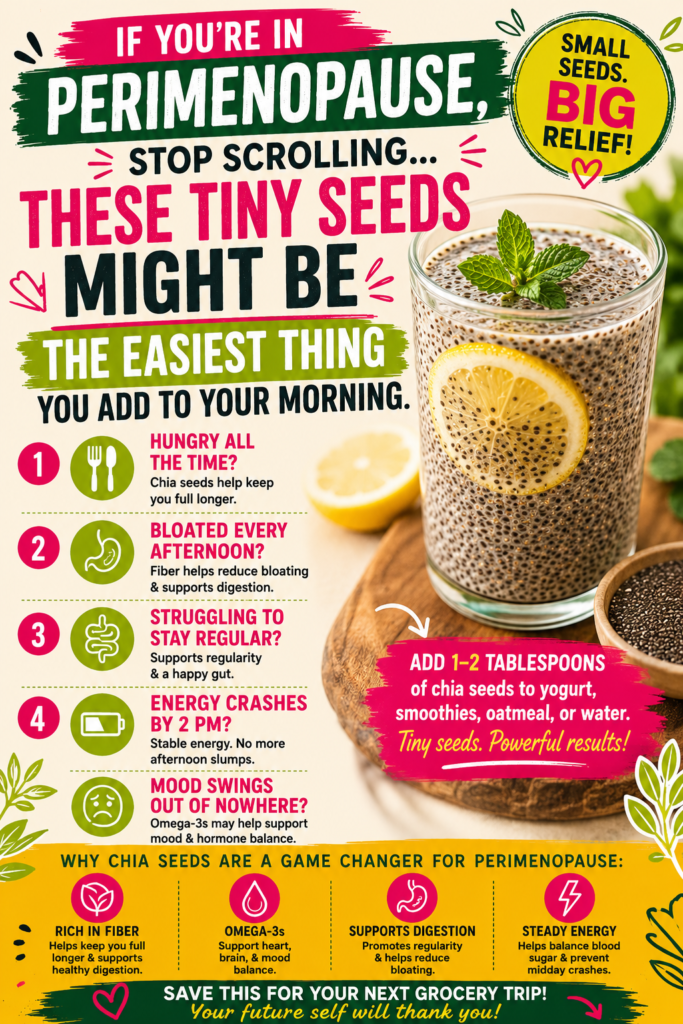
Title: Chia Seeds for Perimenopause: Benefits, Nutrition & Easy Ways to Eat Them
Description: Discover how chia seeds may support women during perimenopause with fiber, omega-3s, and nutrients. Learn the benefits, how to eat them, and simple recipes.
Chia Seeds for Perimenopause: Could These Tiny Seeds Be the Easiest Healthy Habit You Start?
Have you ever felt like your body suddenly changed overnight?
You’re eating healthy…
Trying to lose weight…
Drinking more water…
Yet you’re still dealing with:
- Constant hunger
- Bloating
- Afternoon energy crashes
- Mood swings
- Irregular digestion
If this sounds familiar, you’re not alone.
Perimenopause brings hormonal changes that can affect nearly every part of your body. While there isn’t one food that can “fix” hormones, adding nutrient-dense foods to your daily routine can help support your overall health.
One of the easiest additions?
Chia seeds.
These tiny seeds are packed with nutrients that can help support digestion, heart health, blood sugar balance, and lasting fullness.
What Are Chia Seeds?
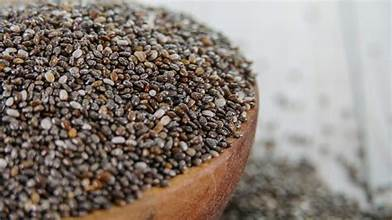
Chia seeds come from the Salvia hispanica plant.
Although tiny, they’re loaded with nutrition.
Just 2 tablespoons contain approximately:
- 10 grams of fiber
- 5 grams of protein
- Plant-based omega-3 fats
- Calcium
- Magnesium
- Phosphorus
- Antioxidants
Because they absorb many times their weight in water, they form a gel-like texture that helps create filling meals and snacks.
1. They Help You Feel Fuller Longer
One of the biggest struggles during perimenopause is feeling hungry shortly after eating.
Fiber slows digestion and helps food stay in your stomach longer, making meals more satisfying.
Adding chia seeds to yogurt, oatmeal, or smoothies can make breakfast more filling and may reduce the urge to snack between meals.
Easy ideas:
- Greek yogurt + berries + chia seeds
- Overnight oats
- Protein smoothie
- Cottage cheese bowl
2. They Support Healthy Digestion
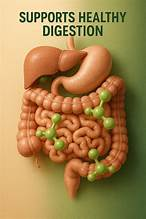
Hormonal changes can sometimes affect digestion, leading to bloating or constipation.
Chia seeds are rich in soluble fiber, which absorbs water and helps support regular bowel movements.
To avoid digestive discomfort:
- Start with 1 tablespoon per day.
- Drink plenty of water.
- Increase gradually if tolerated.
3. They May Help Support Steady Blood Sugar
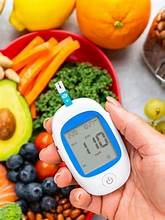
Blood sugar swings can leave you feeling tired, hungry, and craving sweets.
The fiber in chia seeds slows how quickly carbohydrates are digested, which may help support steadier blood sugar levels as part of a balanced meal.
For the best results, pair chia seeds with:
- Protein
- Healthy fats
- Whole fruits
- Vegetables
4. They Provide Plant-Based Omega-3s
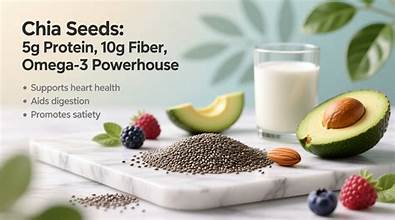
Omega-3 fats help support overall health, including heart and brain health.
Chia seeds are one of the richest plant sources of ALA (alpha-linolenic acid), a type of omega-3 fat.
While ALA isn’t the same as the omega-3s found in fatty fish, it’s still a valuable part of a healthy diet.
5. They Can Support Weight Management
No single food causes weight loss.
However, foods that help you stay satisfied can make healthy eating easier.
Because chia seeds provide fiber, healthy fats, and a small amount of protein, they may help reduce hunger and support healthy eating habits when combined with a balanced diet and regular physical activity.
6. They’re Incredibly Easy to Add to Meals
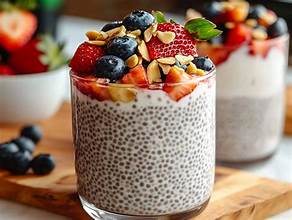
One of the best things about chia seeds is how versatile they are.
Try adding them to:
- Smoothies
- Greek yogurt
- Overnight oats
- Cottage cheese
- Oatmeal
- Salads
- Homemade muffins
- Lemon water (after soaking)
- Homemade energy bites
My Favorite Chia Seed Morning Drink
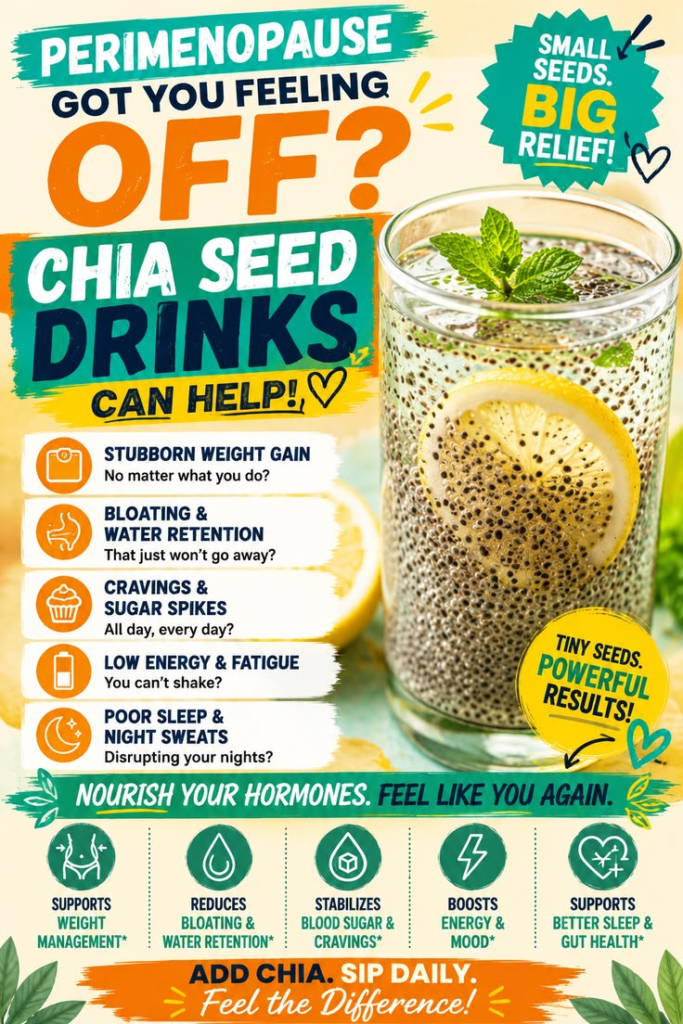
Ingredients
- 1–2 tablespoons chia seeds
- 12–16 ounces cold water
- Juice of half a lemon
- Ice
- Optional: fresh mint
Directions
- Stir the chia seeds into the water.
- Let them soak for 15–30 minutes until they form a gel.
- Add lemon juice and mint.
- Stir again before drinking.
Things to Know Before Eating Chia Seeds
To enjoy chia seeds comfortably:
- Drink enough water throughout the day.
- If you’re new to high-fiber foods, start with a smaller serving.
- Increase your intake gradually.
- If you have swallowing difficulties, avoid eating dry chia seeds because they expand when they absorb liquid.
If you have a medical condition or take medications, ask your healthcare provider whether chia seeds are appropriate for you.
Simple Daily Habits That Work Well With Chia Seeds
Adding chia seeds is just one piece of the puzzle.
You’ll likely get the greatest benefit by combining them with healthy habits such as:
- Eating protein with every meal
- Walking regularly
- Strength training
- Staying hydrated
- Managing stress
- Prioritizing sleep
- Eating plenty of fruits and vegetables
Small habits practiced consistently often have a bigger impact than trying to be perfect.
Final Thoughts

Perimenopause can make your body feel unfamiliar, but nourishing it doesn’t have to be complicated.
Chia seeds aren’t a miracle food, but they are an easy, affordable way to add more fiber, healthy fats, and important nutrients to your day.
Sometimes the smallest habits really do lead to meaningful changes over time.
Frequently Asked Questions

How many chia seeds should I eat each day?
Most people start with 1 tablespoon daily and increase to 1–2 tablespoons as tolerated. Be sure to drink enough water when increasing fiber intake.
Can chia seeds help with weight loss?
Chia seeds don’t directly cause weight loss, but their fiber and healthy fats can help you feel fuller for longer. They work best as part of an overall healthy eating pattern.
Should I soak chia seeds before eating them?
Many people prefer soaking chia seeds because they become softer and easier to digest. They can also be sprinkled on foods like yogurt or oatmeal, but if eating them dry, make sure you drink plenty of water.
Do chia seeds help with bloating?
Some people find that increasing fiber gradually and staying hydrated supports regular digestion, which may help reduce bloating over time. Others may notice temporary bloating if they increase fiber too quickly.
Are chia seeds safe during perimenopause?
For most people, yes. Chia seeds are a nutritious whole food that can be part of a balanced diet. If you have digestive conditions, swallowing problems, or take medications, check with your healthcare provider before making significant dietary changes.
What’s the best time of day to eat chia seeds?
There’s no single “best” time. Many women enjoy them at breakfast because they help create a more filling meal, but they can be eaten at any time of day.
Disclaimer
Disclaimer: This article is for educational and informational purposes only and is not intended to diagnose, treat, cure, or prevent any disease. Chia seeds are not a substitute for medical care or prescribed treatment. Individual responses to foods vary. Always consult your physician or another qualified healthcare professional before making changes to your diet, especially if you are pregnant, breastfeeding, have a medical condition, take medications, or have concerns about allergies or swallowing difficulties.