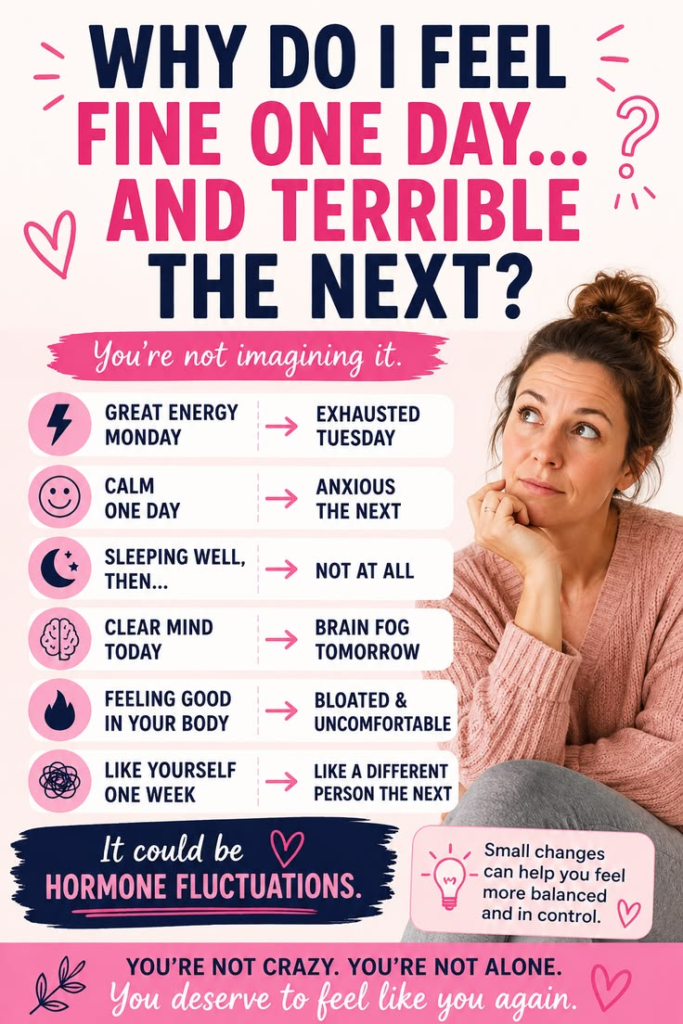
Have you ever had a day where you felt energetic, motivated, and completely like yourself—only to wake up the next day feeling exhausted, anxious, irritable, or overwhelmed?
If so, you’re not alone.
Many women over 35 find themselves wondering why their mood, energy, sleep, and motivation seem to change from day to day. One day everything feels manageable. The next day even simple tasks feel difficult.
While stress, sleep, and lifestyle habits can all play a role, hormone fluctuations may also contribute to these unpredictable changes.
You’re Not Imagining It
One of the most frustrating parts of perimenopause is how inconsistent it can feel.
Unlike a cold or illness that follows a predictable pattern, hormone changes often come in waves.
You may feel great for several days, only to suddenly experience:
- Fatigue
- Brain fog
- Anxiety
- Mood swings
- Poor sleep
- Low motivation
- Increased irritability
Because the symptoms come and go, many women begin questioning themselves.
Why Hormones Can Affect How You Feel
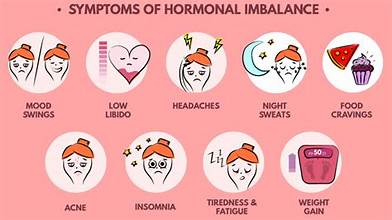
Hormones influence many systems throughout the body.
They help regulate:
- Sleep
- Mood
- Energy levels
- Stress response
- Body temperature
- Appetite
- Mental focus
When hormone levels fluctuate, it’s common to notice changes in how you feel physically and emotionally.
This is one reason why symptoms may seem unpredictable from one day to the next.
Other Factors That Can Make Symptoms Feel Worse
Hormones aren’t the only factor.
Several everyday habits can make fluctuations feel more noticeable.
Poor Sleep
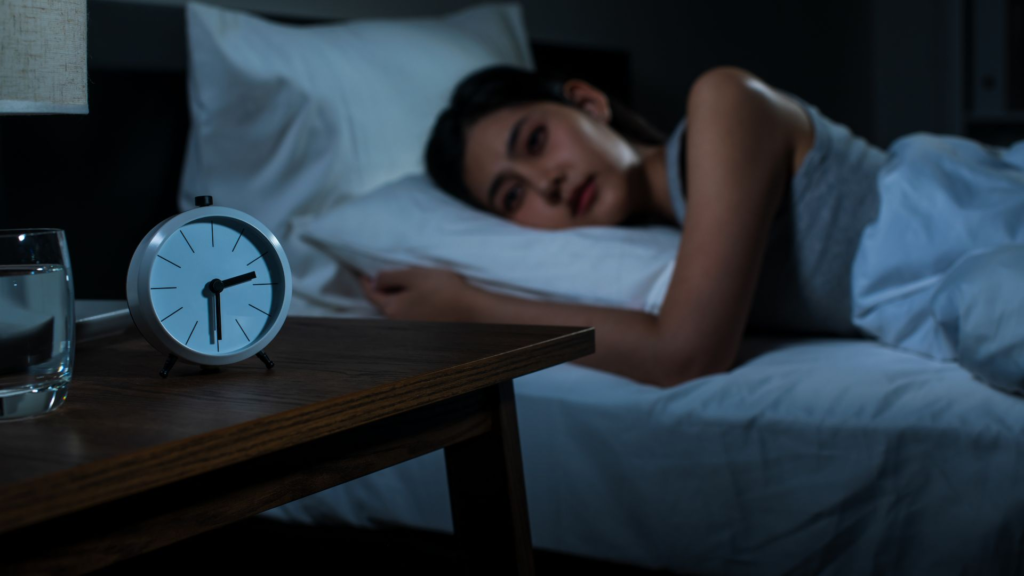
A single night of poor sleep can affect energy, mood, focus, and stress tolerance the next day.
Many women notice sleep changes before other signs of perimenopause appear.
Stress Overload

Chronic stress can leave you feeling emotionally drained and physically exhausted.
When stress levels remain high for long periods, even small challenges can feel overwhelming.
Skipping Meals
Going too long without eating may contribute to energy crashes, irritability, and difficulty concentrating.
Balanced meals can help support more stable energy throughout the day.
Too Much Caffeine

Coffee may provide a temporary boost, but relying on caffeine throughout the day can sometimes contribute to sleep issues, jitters, and energy crashes later on.
Lack of Recovery Time
Many women spend years caring for everyone else while neglecting their own needs.
Without time to recharge, emotional and physical exhaustion can build up over time.
Signs That Hormone Fluctuations May Be Playing a Role
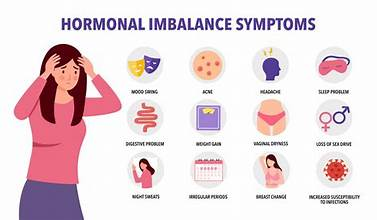
You may notice:
- Some days you feel completely normal
- Some days you feel unusually emotional
- Your sleep quality changes from night to night
- Your energy levels are unpredictable
- Brain fog appears without warning
- Symptoms seem to come and go
These patterns are commonly reported by women during perimenopause.
What Can Help?
While every woman is different, many find these habits helpful:
Prioritize Sleep
Aim for a consistent bedtime and create a relaxing evening routine.
Eat Protein Regularly
Protein-rich meals may help support steady energy throughout the day.
Stay Hydrated
Even mild dehydration can contribute to fatigue and headaches.
Manage Stress
Walking, journaling, stretching, and spending time outdoors can help support overall well-being.
Pay Attention to Patterns
Keeping a simple journal of your sleep, mood, energy, and cycle can help you identify trends over time.
Final Thoughts
If you’ve been wondering why you feel fine one day and terrible the next, you’re not alone.
Many women experience changes in energy, mood, focus, and sleep during perimenopause and often don’t realize that fluctuating hormones may be part of the picture.
The good news is that understanding what’s happening can help you make informed choices and feel more confident navigating this stage of life.
Disclaimer
The information provided on Hormone Glow Daily is for educational and informational purposes only and is not intended as medical advice, diagnosis, or treatment. Always consult a qualified healthcare professional before making changes to your diet, supplements, medications, or health routine. Individual results may vary.