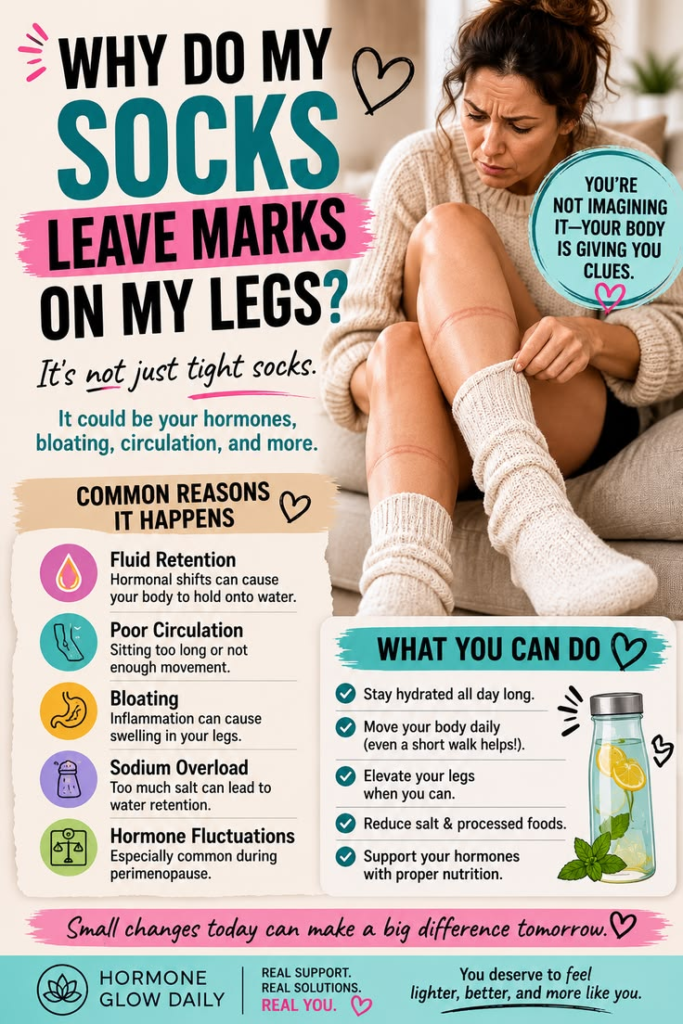
Those deep sock marks at the end of the day might seem harmless—but sometimes they’re your body’s way of telling you something deserves a closer look.
If you’ve ever taken off your socks and noticed deep indentations around your ankles or calves, you’re not alone. While snug socks are one possible reason, they aren’t always the whole story.
As women move through their late 30s, 40s, and beyond, hormonal changes, lifestyle habits, and circulation can all play a role in why those marks become more noticeable.
Here’s what could really be happening—and what you can do about it.
1. Your Body Is Holding Onto More Fluid Than You Realize
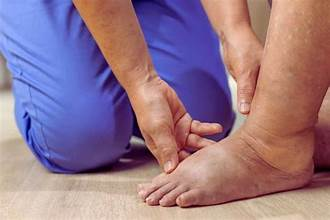
One of the most common reasons sock marks appear is mild fluid retention (edema).
Hormonal fluctuations during perimenopause can cause the body to retain extra water, especially after:
- Sitting for long periods
- Eating salty meals
- Traveling
- Hot weather
- Standing all day
Many women assume they’ve simply gained weight, when in reality they may be retaining excess fluid.
Helpful Tip
Drink water consistently throughout the day. Ironically, dehydration can encourage the body to hold onto more water.
2. Hormonal Changes Can Affect Blood Vessels
Estrogen doesn’t just affect reproductive health—it also helps support healthy blood vessels.
As estrogen levels begin to fluctuate during perimenopause, some women notice:
- Swollen ankles
- Heavy legs
- Increased puffiness
- More noticeable sock marks
Hormones influence how blood vessels expand and contract, which may contribute to fluid pooling in the lower legs.
3. Sitting Too Long Slows Your “Second Heart”
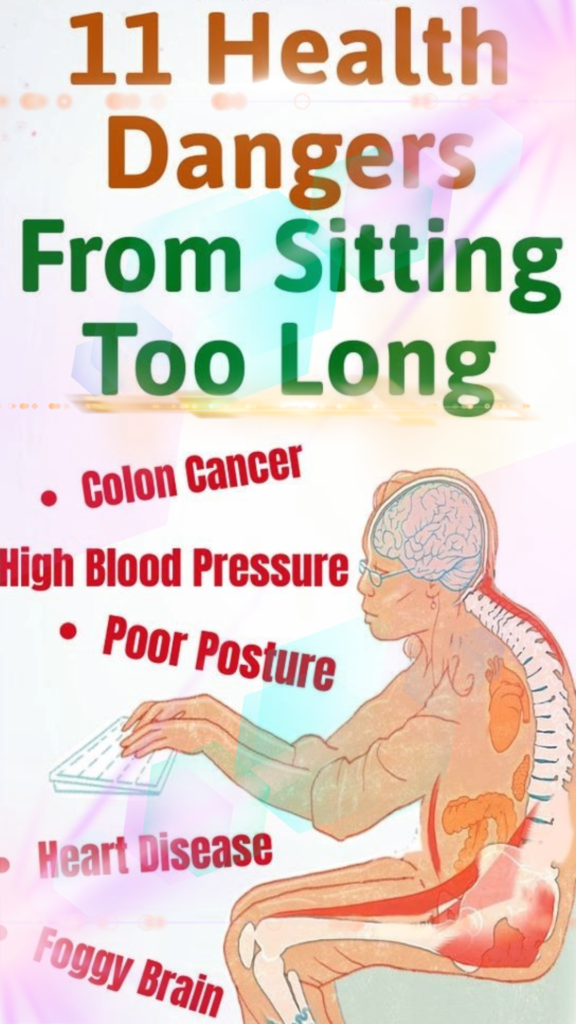
Many people don’t realize your calf muscles are often called your “second heart.”
Every time you walk, your calf muscles help push blood back toward your heart.
If you spend hours:
- Working at a desk
- Watching TV
- Driving
- Traveling
your calf muscles aren’t pumping as effectively, making it easier for fluid to collect around your ankles.
Try This
Set a timer to stand up and walk for 2–5 minutes every hour.
4. Heat Can Make Sock Marks Worse
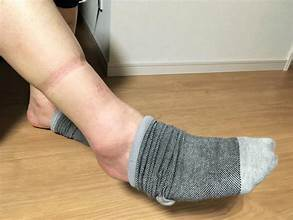
Have you noticed the marks seem deeper during summer?
Warm temperatures cause blood vessels to widen, making it easier for fluid to move into surrounding tissues.
This is one reason many women notice:
- Swollen feet
- Puffy ankles
- Tight shoes
- Deeper sock lines
during hot weather.
Cooling your legs and staying hydrated may help reduce mild swelling.
5. Your Diet May Be Working Against You
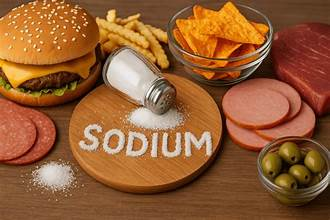
Many processed foods contain surprisingly large amounts of sodium.
Too much sodium can encourage the body to retain water, making swelling more noticeable.
Foods that commonly contain hidden sodium include:
- Frozen meals
- Canned soups
- Restaurant meals
- Deli meats
- Snack foods
Balancing sodium with potassium-rich foods like bananas, spinach, sweet potatoes, avocados, and beans may support healthy fluid balance.
6. Compression Doesn’t Always Mean Something Is Wrong
Some socks simply leave impressions because the elastic is tight.
If the marks:
- Fade within a short time,
- Aren’t painful,
- And you don’t have swelling,
they may simply reflect the pressure from the sock.
Trying socks with a looser cuff or choosing socks designed to reduce pressure can make them more comfortable.
7. Persistent Swelling Shouldn’t Be Ignored
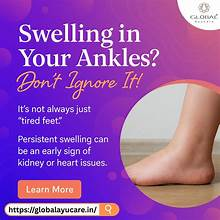
Occasional sock marks are common.
However, swelling that is:
- Persistent,
- Painful,
- Suddenly worse,
- Present in only one leg,
- Or accompanied by redness, warmth, chest pain, or shortness of breath
should be evaluated promptly by a healthcare professional because it can sometimes signal a more serious medical condition.
What You Can Do Today
Small daily habits can make a difference:
- Stay hydrated throughout the day.
- Take short walking breaks if you sit for long periods.
- Elevate your legs when relaxing.
- Reduce highly processed foods if your sodium intake is high.
- Include potassium-rich foods in a balanced diet.
- Wear socks that fit comfortably without excessive pressure.
- Stay physically active to support healthy circulation.
Remember, your body often gives subtle clues before bigger problems develop. Paying attention to those clues can help you make informed decisions about your health.
Frequently Asked Questions
Are sock marks always caused by tight socks?
No. Tight socks are one possible cause, but fluid retention, prolonged sitting, hot weather, sodium intake, hormone fluctuations, and circulation can also contribute.
Why do sock marks seem worse during perimenopause?
Hormonal changes can influence how the body regulates fluids and how blood vessels function. Some women notice increased swelling or fluid retention during this stage of life.
Can dehydration cause sock marks?
It can contribute indirectly. When you’re dehydrated, your body may retain more water, which can make mild swelling more noticeable.
Is walking really helpful?
Yes. Walking activates your calf muscles, which help move blood and fluid back toward your heart. Even a short walk every hour can be beneficial if you spend much of the day sitting.
When should I see a doctor?
Seek medical evaluation if swelling is sudden, severe, painful, affects only one leg, doesn’t improve with rest, or is accompanied by symptoms such as redness, warmth, chest pain, or difficulty breathing.
Is eating less salt enough to stop sock marks?
Reducing excess sodium may help if fluid retention is contributing, but it’s only one part of the picture. Hydration, movement, overall diet, medications, hormones, and certain health conditions can all play a role.
🌿Get Your Free Hormone Guide 🌿
If you’re navigating perimenopause, hormone changes, bloating, fatigue, or other symptoms after 35, download my FREE 7-Day Hormone Reset Starter Guide for simple daily habits that can help you feel your best.
Get your free guide here: https://hormone-glow-daily.kit.com/33263119f4
Disclaimer
The information on Hormone Glow Daily is provided for educational and informational purposes only and is not intended as medical advice, diagnosis, or treatment. Individual health needs vary. Always consult a qualified healthcare professional before making changes to your diet, supplements, medications, or wellness routine, or if you experience persistent, severe, or concerning symptoms such as significant leg swelling, pain, redness, warmth, chest pain, or shortness of breath.