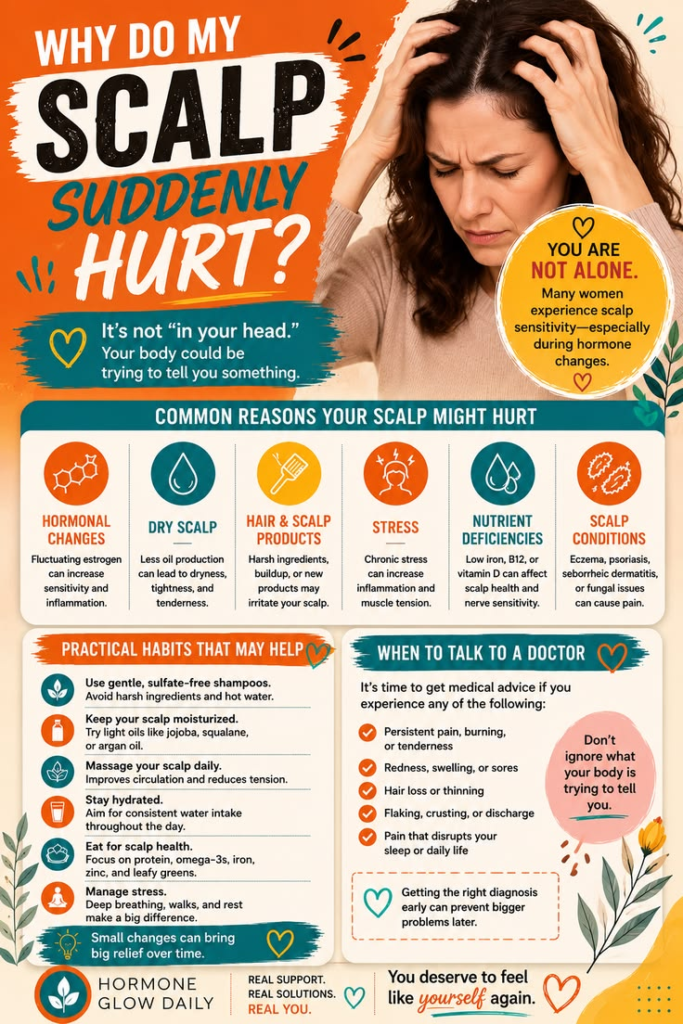
Title: Why Does My Scalp Hurt? Causes, Perimenopause, Relief & When to See a Doctor
Description: Does your scalp suddenly feel sore or painful when you brush your hair or wear a ponytail? Learn what may be causing scalp tenderness, practical ways to find relief, and when it’s time to talk to your doctor.
Have You Ever Thought…
“Why does my scalp suddenly hurt when I touch it?”
Maybe it hurts when you brush your hair.
Maybe putting your hair into a ponytail suddenly feels uncomfortable.
Or perhaps your scalp feels sore even though you haven’t hit your head or changed your hairstyle.
If you’ve been wondering why this is happening, you’re not alone.
Scalp tenderness is a symptom that many women experience but rarely talk about. While it’s not usually the first thing people associate with perimenopause, hormonal changes may play a role for some women. At the same time, several other conditions can also cause a painful scalp.
Let’s explore what might be happening—and what you can do about it.
What Is Scalp Tenderness?
Scalp tenderness means your scalp feels sore, sensitive, painful, or uncomfortable when touched.
Some women describe it as:
- A bruised feeling
- Burning or tingling
- Pain when brushing their hair
- Sensitivity while washing their hair
- Pain when wearing a ponytail
- An aching scalp that seems to come and go
Sometimes the discomfort lasts for hours. Other times it may come and go without an obvious reason.
Can Perimenopause Cause Scalp Pain?
Possibly.
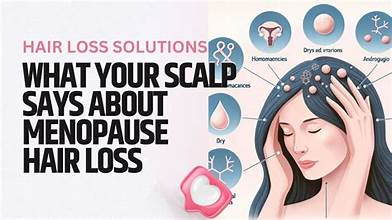
During perimenopause, estrogen levels fluctuate rather than declining in a straight line. Estrogen helps support healthy skin, circulation, and hair follicles. As hormone levels change, some women notice changes in their scalp and hair, including:
- Increased scalp sensitivity
- Hair thinning
- Dry scalp
- Changes in oil production
- Increased shedding
Hormonal changes aren’t the only possible explanation, but they may contribute to how your scalp feels.
Common Reasons Your Scalp Might Suddenly Hurt
1. Hormonal Changes
Fluctuating hormones may make your scalp more sensitive to touch and affect your skin’s moisture balance.
You may also notice:
- Hair shedding
- Dry skin
- Hot flashes
- Poor sleep
- Mood changes
2. Dry Scalp
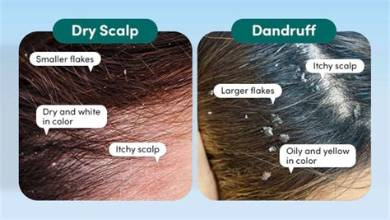
Dry skin isn’t limited to your face or hands.
A dry scalp may become irritated, itchy, flaky, and even painful.
What may help
- Use a gentle, moisturizing shampoo.
- Avoid very hot water.
- Consider a fragrance-free conditioner if your scalp is easily irritated.
3. Tight Hairstyles
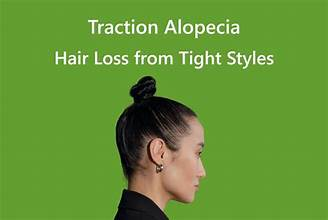
High ponytails, tight buns, braids, or extensions can place constant tension on your scalp.
If the pain improves after wearing your hair down, tension may be contributing.
Try alternating hairstyles and avoiding tight styles every day.
4. Product Irritation
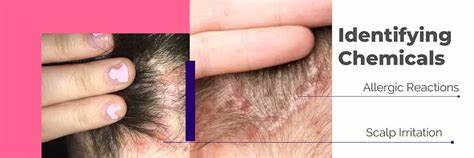
Sometimes the culprit is hiding in your bathroom.
Hair dye, dry shampoo, hairspray, styling products, or heavily fragranced shampoos may irritate sensitive skin.
Ask yourself:
- Did I recently switch products?
- Does the pain start after styling my hair?
- Is my scalp also itchy or red?
5. Stress
Stress doesn’t just affect your mood.
It can increase muscle tension around your scalp, neck, and shoulders, making your scalp feel more sensitive.
Many women notice symptoms worsen during particularly stressful weeks.
6. Nutritional Deficiencies
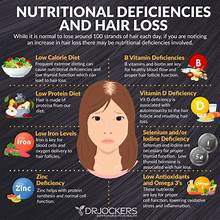
Low levels of certain nutrients can affect your hair and scalp health.
Examples include:
- Iron
- Vitamin D
- Vitamin B12
- Zinc
- Protein
If you suspect a deficiency, speak with your healthcare provider before starting supplements.
7. Scalp Conditions
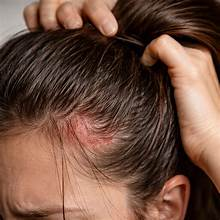
Conditions such as:
- Psoriasis
- Seborrheic dermatitis
- Eczema
- Folliculitis
can all cause pain, itching, redness, or flaking.
Daily Habits That May Help
Stay Hydrated
Healthy skin and scalp start with proper hydration.
Drink water consistently throughout the day instead of waiting until you’re thirsty.
Eat Foods That Support Hair and Scalp Health
Focus on nutrient-rich foods like:
- Eggs
- Salmon
- Greek yogurt
- Pumpkin seeds
- Spinach
- Blueberries
- Walnuts
- Avocados
These foods provide protein, healthy fats, vitamins, and minerals that support overall hair and skin health.
Massage Your Scalp Gently
A gentle fingertip massage may help reduce tension and increase circulation.
Avoid vigorous scratching if your scalp is already irritated.
Manage Stress
Simple daily habits can make a difference.
Try:
- Walking
- Yoga
- Deep breathing
- Meditation
- Journaling
- Getting enough sleep
Be Gentle With Your Hair
Avoid:
- Tight hairstyles
- Excessive heat styling
- Harsh chemical treatments
- Aggressive brushing
Treat your scalp as gently as you would your face.
When Should You Talk to Your Doctor?

Most scalp tenderness isn’t an emergency, but you should seek medical advice if you experience:
- Sudden, severe scalp pain
- Persistent tenderness that doesn’t improve
- Redness or swelling
- Open sores
- Hair loss in patches
- Fever
- Drainage or signs of infection
- Severe headaches with scalp pain
- Vision changes or jaw pain, especially if you’re over 50
A healthcare professional can help determine whether the cause is hormonal, dermatologic, nutritional, neurological, or something else that needs treatment.
Frequently Asked Questions
Is scalp pain a symptom of perimenopause?
It can be for some women. Hormonal fluctuations may affect skin sensitivity and scalp health, but scalp pain also has many other possible causes.
Why does my scalp hurt when I wear a ponytail?
Tight hairstyles place tension on the hair follicles and scalp. Wearing your hair loosely more often may help reduce discomfort.
Can stress make my scalp hurt?
Yes. Stress can contribute to muscle tension and increase your perception of pain, making scalp tenderness feel worse.
Can vitamin deficiencies cause scalp pain?
Some nutritional deficiencies, including low iron, vitamin D, or B12, may contribute to hair and scalp changes. Your healthcare provider can determine whether testing is appropriate.
Should I wash my hair more often?
Not necessarily. Over washing may dry out your scalp. Choose a gentle shampoo that works for your hair type and scalp condition.
Can scalp tenderness be related to hair loss?
Sometimes. Certain conditions that cause scalp inflammation or irritation can also be associated with increased shedding. However, hair loss has many potential causes and should be evaluated if it is significant or persistent.
Is scalp pain ever an emergency?
Seek immediate medical attention if scalp pain is severe, comes with fever, vision changes, sudden weakness, confusion, or follows a head injury.
Final Thoughts

If your scalp suddenly feels sore every time you brush your hair or touch your head, don’t dismiss it as something you just have to live with.
Sometimes it’s as simple as a tight hairstyle or dry skin. Other times, it may be one more clue that your body is changing during perimenopause—or a sign of another condition that deserves attention.
The most important thing is to pay attention to patterns, treat your scalp gently, and reach out to your healthcare provider if symptoms persist or worsen.
Your body has a way of communicating with you. Learning to recognize those signals is one of the best ways to care for your long-term health.
💚 Get Your FREE 7-Day Hormone Reset Guide
Looking for simple, realistic ways to support your hormones naturally?
Download my FREE 7-Day Hormone Reset Guide for practical daily habits, nutrition tips, and easy lifestyle changes designed to help women over 35 feel more energized and balanced.
👉 https://hormone-glow-daily.kit.com/33263119f4
Affiliate Disclosure
Some articles on Hormone Glow Daily contain affiliate links. If you click a link and make a qualifying purchase, I may earn a small commission at no additional cost to you. I only recommend products I genuinely believe may provide value to my readers. Your support helps keep Hormone Glow Daily running and allows me to continue creating free educational content.
Medical Disclaimer
This article is for educational and informational purposes only and should not be considered medical advice, diagnosis, or treatment. Although hormonal changes during perimenopause may contribute to scalp tenderness or sensitivity in some women, many other conditions—including skin disorders, infections, migraines, nutritional deficiencies, medication side effects, and neurological conditions—can cause similar symptoms. Always consult your physician or another qualified healthcare professional if you have persistent, worsening, or concerning symptoms, or before making changes to your healthcare routine. Never ignore or delay seeking professional medical advice because of something you have read on this website.